
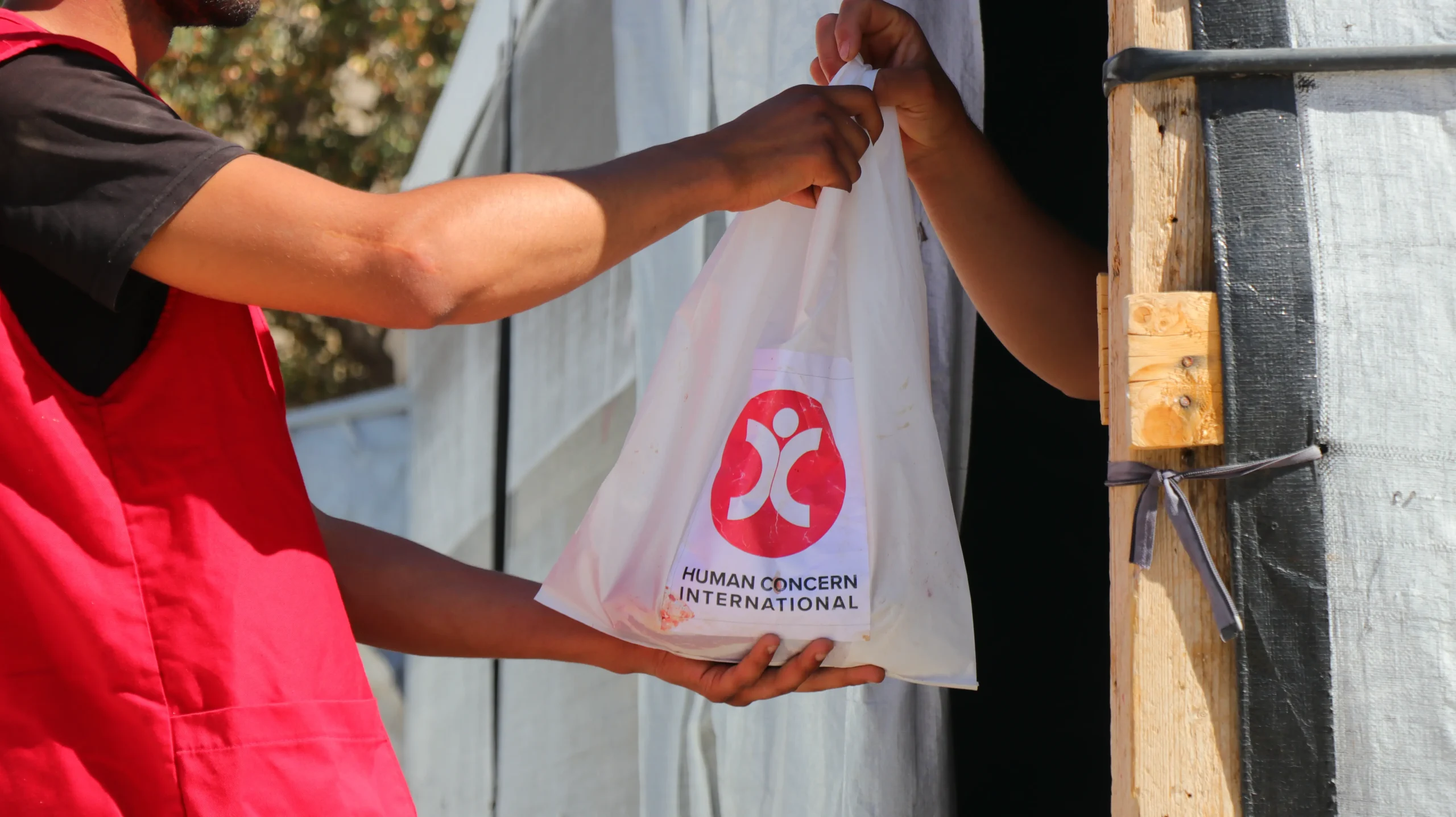
Every year, during the blessed days of Dhul Hijjah, Muslims around the world come together to observe one of Islam’s most profound acts of worship—Qurbani, or Udhiyah. It is more than just the ritual sacrifice of an animal; it is an embodiment of obedience, compassion, and unity, reviving the devotion of Prophet Ibrahim (AS) and the values he upheld.
At Human Concern International (HCI), we see Qurbani not just as a religious obligation, but as a life-saving tradition that uplifts vulnerable communities through nourishment, dignity, and love. Here’s everything you need to know about this sacred practice and how you can be part of it this year.
Qurbani is a significant religious practice observed by Muslims worldwide. It refers to the act of sacrificing an animal during the Islamic month of Dhul Hijjah, specifically on Eid al-Adha. This act commemorates Prophet Ibrahim’s (Abraham’s) willingness to sacrifice his son in obedience to God.
Financially capable Muslims are encouraged to perform Qurbani as a symbol of devotion, gratitude, and charity. Livestock such as sheep, goats, cows, or camels are sacrificed, and the meat is distributed among family, friends, and those in need. This ensures that everyone, especially the less fortunate, can partake in the joyous celebration.
The word Qurbani translates as “nearness.” A reminder that through this act, Muslims draw closer to their Creator.
The Prophet ﷺ said, ‘The first thing we will do on this day of ours, is to offer the (Eid) prayer and then return to make the sacrifice. Whoever does so, he acted according to our Sunnah…’ (Bukhari)
So, is it only a Sunnah and not a fard?
If you don’t possess more than the Nisab amount, you are excused from making the sacrifice.
You can make up for missed Qurbani by sacrificing an extra animal this year. Simply calculate how many years you’ve missed and match that number with the sacrifices.
You can donate as early as you’d like! Early donations ensure your Qurbani is fulfilled on time and widely distributed. However, donations are accepted up until the second day after Eid before Maghrib.
Udhiya is performed during the three days of Eid al-Adha—on the 10th, 11th, and 12th of Dhul Hijjah. We encourage early donations to guarantee timely fulfillment and proper distribution.
Animals must be healthy and free of disease or deformity, including the following conditions:
With compassion and gentleness. In Islam, the ethical treatment of animals is not just encouraged. It is a responsibility. The Prophet Muhammad (peace be upon him) emphasized mercy towards all living beings, and this is reflected in every step of the Qurbani process.
Animals selected for Qurbani must be healthy, well-nourished, and free from any defects. They should not be overworked, neglected, or mistreated. During transportation and while being held, animals must have access to clean water, food, and shelter. Those handling the animals are required to treat them gently and avoid causing any stress or harm.
When the time of sacrifice comes, the process must be carried out in the most humane way possible. The Prophet (peace be upon him) said, “Verily Allah has prescribed excellence in all things. So if you kill, then kill well, and if you slaughter, then slaughter well. Let each one of you sharpen his blade and let him spare suffering to the animal he slaughters.”(Muslim)
At Human Concern International, we uphold these teachings by ensuring that all animals are treated with dignity and respect throughout the entire Qurbani process. We follow strict Islamic and ethical guidelines to ensure your sacrifice is carried out with integrity and care.
Freshly cut and distributed to families, with quantity based on household size.
It is highly recommended not to cut your hair or nails until your Qurbani is offered.
The Prophet (saw) said, ‘When the ten days (of Dhul Hijjah) start, and one of you intends to sacrifice, then let him not cut his hair or his nails.’ (Muslim)
To ensure no region is left out, we distribute Qurbani based on urgency of need, reaching remote and underserved communities across entire continents.
The Prophet ﷺ performed an additional sacrifice for Muslims who couldn’t afford to do so:
“The Prophet ﷺ sacrificed for the one who could not sacrifice from his Ummah…” (Tabarani & Ahmad)
You can revive this forgotten Sunnah by donating a second Qurbani for those unable to give.
Last year, your generosity helped us deliver Qurbani to:
You helped make Eid a joyful, dignified experience for thousands.
This year, Human Concern International aims to reach 23 countries, including crisis-affected regions like Gaza, Yemen, and Lebanon. We continue to prioritize vulnerable populations in remote and conflict-hit areas, ensuring your Qurbani has the greatest possible impact.
When you give with HCI, you’re not just donating meat. You’re offering relief, joy, and a renewed sense of community—upholding Islamic values and humanitarian care, side by side.
Let’s come together this Eid al-Adha and make 2025 a celebration of generosity and global solidarity. Your Qurbani, their Eid.
We’ve served Palestinians in Gaza for over two decades with food, clean water, orphan support, and more. Despite the blockade, we remain committed to delivering Qurbani meat.
How Will It Work?
We perform the sacrifice in a neighboring country under halal conditions, can and freeze the meat, and deliver it once borders open. This preserves quality and ensures timely delivery.
What If Borders Stay Closed?
If entry remains blocked, we will redirect the meat or equivalent aid to Palestinian refugees in Egypt, Jordan, or Lebanon—ensuring your Qurbani still reaches those in urgent need.
This Eid, stand with the vulnerable. Let your Qurbani be more than a ritual. Let it be a symbol of shared humanity.
Donate early. Give with purpose. Celebrate with compassion.
Because every share is more than meat. It’s mercy in action.